
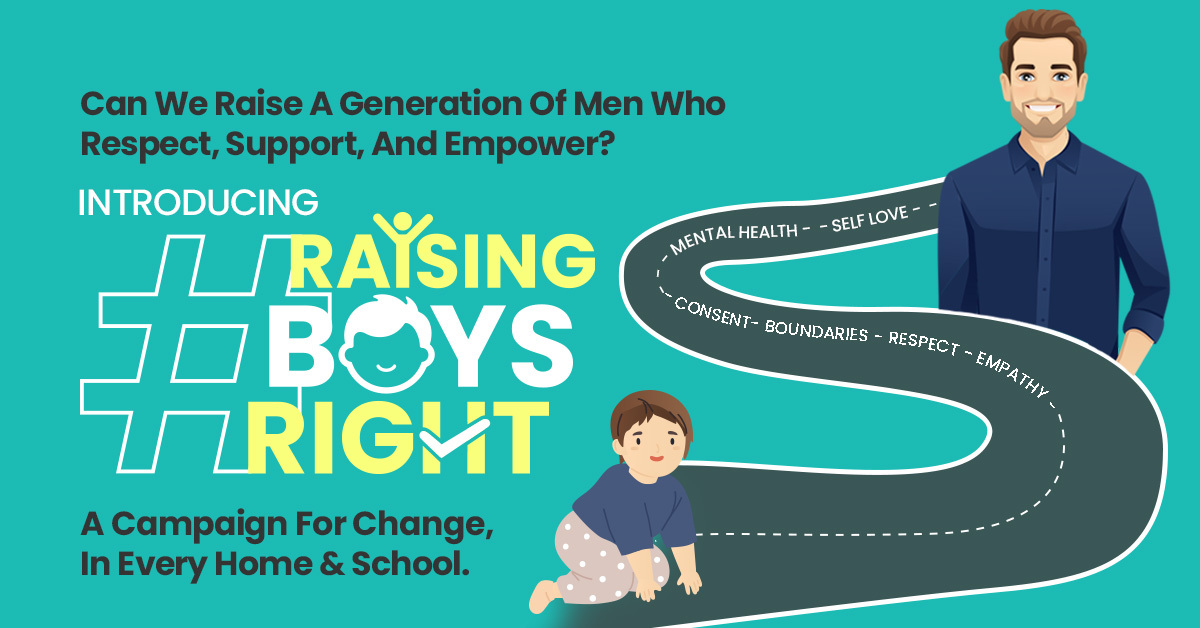
#RaisingBoysRight is more than a campaign—it’s a commitment to raise boys who understand respect, stand for equality, and challenge the norms that hold us back.
The Better India has partnered with Equal Community Foundation to create the ‘Raising Boys Right’ guide, a practical toolkit filled with age-appropriate ways to teach boys values like empathy, consent, and respect.
Let’s give our sons more than just life skills; let’s give them the tools to lead with kindness and integrity.
Because a better, safer, and fairer India begins with how we raise our boys.
Download the guide now and start the conversation today:
Insights from the guide:What parents, teachers and experts are saying 🎙️
Watch: Dreams have no gender 📹
Stories of change 💫
Leading By Example 👣




What India is talking about 📣
Collab partners - Teach For India 🤝🏼
But what about? 💁🏻♀️
Why does this guidebook specifically address raising boys?
The guidebook is centred on raising boys right because traditional gender roles often lead boys to suppress emotions and embrace harmful stereotypes. It helps boys understand respect, consent, and equality, empowering them to challenge these expectations. By doing so, we can create a more understanding and equal society for everyone.
How can this guidebook support me in teaching children about respect and equality?
The guidebook provides easy-to-follow strategies for parents, teachers, and caregivers to teach children about respect, equality, and consent. It offers practical tools like conversation starters, role-playing, and activities to help guide discussions about sensitive topics. The guidebook helps adults model respectful behaviour, creating a space where children can learn about healthy relationships and gender equality.
What if my child is just a toddler? Is it too early for me to be talking to him about gender bias and consent?
It's never too early to talk to your toddler about gender bias and consent. Even in babyhood, we may unconsciously treat boys and girls differently, like allowing boys more freedom or discouraging emotional expression. The first step is becoming aware of these biases and changing them. Toddlers learn empathy by observing us and understanding the impact of their actions. By addressing these issues early, we help them grow up with respect, empathy, and awareness of gender equality.
I have brought up my son well. Do I still need the guidebook?
Even if you've raised your son well, the guidebook can still be beneficial. Gender stereotypes develop over time and are not innate. While teaching respect is important, the guidebook offers a practical, age-appropriate framework to help boys understand and practice equality, consent, and empathy. It equips them with the tools, language, and values needed to challenge harmful gender stereotypes and toxic masculinity, reinforcing the respect they should both give and expect in relationships.
Is the guidebook only for parents of boys or girls as well?
Respect is not biased towards any gender. The guidebook’s intent goes beyond prescribing solutions; it aims to spark meaningful conversations and, in doing so, ensure steps towards an equitable world for all. While the guidebook intends to create a world where we are raising our boys right, it also includes expert-backed strategies by which girls can be taught to stand up for themselves, speak out and respect boys the same way they expect to be respected.
I have children with special needs. How can I adapt the guidebook strategies to teach them these concepts?
The guidebook is a practical, age-appropriate framework that equips boys with the tools, language, and values to champion equality, understand consent, break free from harmful gender stereotypes, and challenge toxic masculinity.
For children with special needs, these strategies can be tailored through hands-on activities like games, role play, storytelling, and art-based exercises such as drawing and crafts. These engaging methods help teach key concepts like respect, consent, boundaries, and equality in a way that resonates with each child's unique way of learning. The guidebook focuses on creating a safe and inclusive space to encourage understanding and empathy.
My child is not very open about the challenges they are going through. Can the guidebook help me broach these topics?
If your child is struggling to open up, the guidebook can help you initiate important conversations. Many children face challenges like bullying, but parents often don't know until the situation worsens. Open dialogue is key to addressing these issues. The guidebook offers expert-backed strategies to teach children about safety, as well as practical conversation starters for parents and teachers to broach sensitive topics like bullying, consent, and boundaries. It helps create a safe space for communication and understanding.
I have a stubborn teenager who won’t listen. Can the guidebook help me break down topics of sex, bullying and gender bias with him?
The guidebook is filled with vocabulary checklists, games, conversation starters, questions to ask your child, and thought-provoking activities that address complex topics of gender equality, sexuality, cyberbullying and stereotypes. The strategies are designed to be engaging and are carefully adapted to suit the varied learning styles of children and adolescents.
Isn’t consent limited to sex?
No. Teaching consent from childhood is essential because it helps establish the foundation for healthy, respectful relationships and fosters a deeper understanding of personal boundaries, respect, and mutual understanding. As a child grows older, this understanding of consent will help them respect others’ boundaries; it will empower children to speak up and promote emotional safety.
Why do I need this guidebook? Can’t I just have these conversations without a guidebook?
Broaching a subject such as consent, boundaries and sex can be uncomfortable for most parents and teachers. Children too are not in favour of being ‘taught’ right from wrong. The guidebook helps parents and teachers address these topics in a fun way that drives home crucial messages while also keeping them age-appropriate and cool.